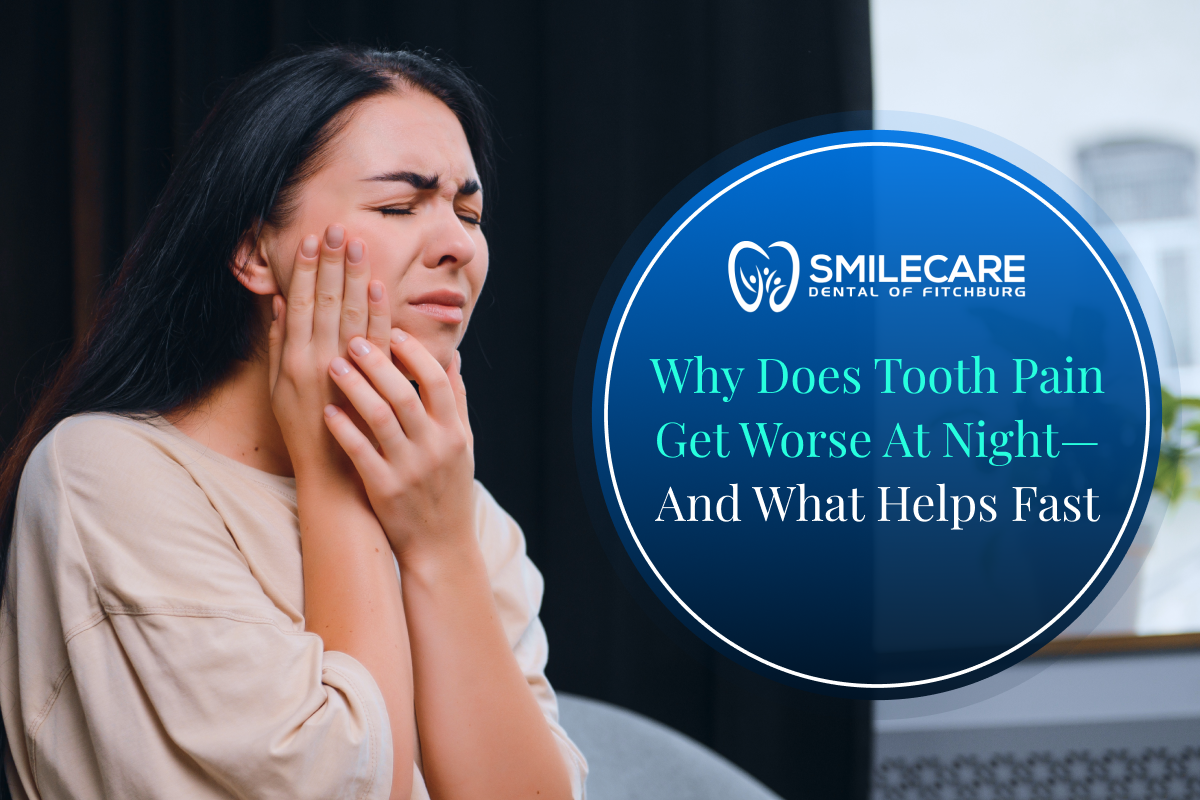
Dealing with tooth pain can be incredibly frustrating, but when that pain intensifies at night, it can feel unbearable. If you’ve ever woken up in the middle of the night with an excruciating toothache, you’re not alone.
What many people don’t realize is that nighttime tooth pain isn’t just a coincidence — there’s actually a real science behind why it feels so much worse when you lie down. Increased blood flow to the head, the absence of daytime distractions, and your body’s natural inflammatory response all work together to turn a dull ache into something far more intense after dark.
At SmileCare Dental of Fitchburg, we understand the urgency and challenges of experiencing a toothache that worsens as the night progresses. In this blog, we’ll walk you through exactly why this happens — and more importantly, what you can do to find fast relief.
Why Does Tooth Pain Get Worse At Night?
Tooth pain, unfortunately, seems to hit its peak when you’re trying to rest. There are several reasons why this happens, and understanding them can help you manage the discomfort until you can get professional care from an emergency dentist –
- Changes in Blood Flow: When you lie down to sleep, the position of your head can increase blood flow to your head and teeth. This leads to heightened pressure in the inflamed areas of the tooth, which can amplify the pain.
- Less Distraction: During the day, you’re busy with work, errands, and other activities. At night, however, when you’re trying to relax, your mind isn’t distracted, and that’s when the pain can become more noticeable.
- Increased Sensitivity to Pressure: If you’re suffering from an infection or tooth decay, the tissues around your tooth might be inflamed. When you lie down, the pressure on the affected area can increase, making the pain feel much worse.
- Jaw Clenching at Night: Many people clench or grind their teeth while they sleep, a condition known as bruxism. This habit can exacerbate a toothache, especially if there is an underlying issue such as a cavity or gum disease.
- Temperature Sensitivity: Toothaches often worsen with temperature changes, and at night, your body cools down, making the nerve inside a damaged tooth more sensitive to hot or cold foods or drinks.
What Issues Do Patients Face When Tooth Pain Increases?
The severity of your dental ache at night might also be accompanied by other issues, such as:
- Inability to Sleep: The throbbing pain can make it difficult to fall asleep or stay asleep, leaving you feeling fatigued and stressed.
- Pain Radiating to Other Areas: Sometimes, a toothache can radiate to your jaw, neck, or even your ear, creating a more widespread discomfort.
- Pain During Chewing or Swallowing: If you’ve developed an abscess or another serious dental issue, even the act of chewing or swallowing might worsen the pain.
The combination of these issues can make nighttime pain feel unbearable. However, there are several things you can do to manage the discomfort until you can receive treatment.
Quick Ways to Relieve Tooth Pain at Night
While visiting an emergency dentist is the most effective way to address your toothache, there are ways to get temporary relief at home. Here are some tips to help alleviate your tooth pain quickly:
- Use a Cold Compress: Applying a cold compress to the affected area can help reduce swelling and numb the pain. Wrap ice in a cloth or use a cold pack and place it on your cheek near the painful tooth for about 15-20 minutes at a time.
- Over-the-Counter Pain Relief: Ibuprofen or acetaminophen can help reduce both pain and inflammation. Always follow the dosage instructions carefully and consult your doctor if you have any concerns about taking these medications.
- Elevate Your Head: Propping your head up with extra pillows while you sleep can help reduce blood flow to your head, lessening the pressure that worsens your toothache.
- Saltwater Rinse: Rinsing your mouth with warm saltwater can help clean the affected area and reduce swelling. Saltwater is a natural disinfectant and can temporarily relieve discomfort.
- Clove Oil: This natural remedy has been used for centuries to numb dental pain. Apply a small amount of clove oil directly to the painful area with a cotton ball to reduce pain.
When to See an Emergency Dental Practitioner?
If your oral pain continues or worsens despite these home remedies, it’s time to seek professional help. Toothaches that don’t go away or become more intense could signal a serious dental issue, such as an infection, abscess, or advanced tooth decay, that needs immediate attention.
At SmileCare Dental of Fitchburg, we are here to assist with any urgent dental needs. Our team is ready to help you relieve your dental ache and address any underlying issues causing it. Don’t suffer in silence —call us right away to schedule an appointment.
Don’t Let Toothache Keep You Up at Night- Treat Now!
At our dental office, we understand the challenges of tooth pain, especially when it worsens at night. If you’re experiencing severe discomfort or a toothache that won’t subside, don’t hesitate to reach out. Dr. Berenshteyn is dedicated to helping residents of Fitchburg and the surrounding areas find relief. Book an appointment today and take the first step toward feeling better by visiting our dental office in Fitchburg.
Frequently Asked Questions
- Why does my tooth hurt more at night?
Tooth pain often worsens at night due to changes in blood flow, increased pressure when lying down, and less distraction, making the pain more noticeable. - Can a toothache go away on its own?
While minor toothaches may subside with home remedies, persistent or worsening pain could indicate a serious problem that requires professional dental treatment. - What is the best way to sleep with a toothache?
Sleeping with your head elevated can reduce blood flow to the affected area, helping to minimize the pressure that worsens tooth pain. - How can I stop tooth pain from getting worse at night?
Applying a cold compress, using over-the-counter pain relievers, and rinsing with warm saltwater can all help manage pain until you can visit an emergency dentist. - When should I seek emergency dental care for a toothache?
If your toothache persists for more than a few days, is accompanied by swelling, fever, or pus, or causes severe discomfort, seek immediate dental care. - Can grinding my teeth cause tooth pain at night?
Yes, bruxism (teeth grinding) can lead to tooth sensitivity and pain, especially at night. An emergency dentist can provide a nightguard to prevent damage. - What should I do if my tooth pain keeps me up all night?
If home remedies don’t provide relief, it’s crucial to visit an emergency dentist as soon as possible for proper diagnosis and treatment of the underlying issue.